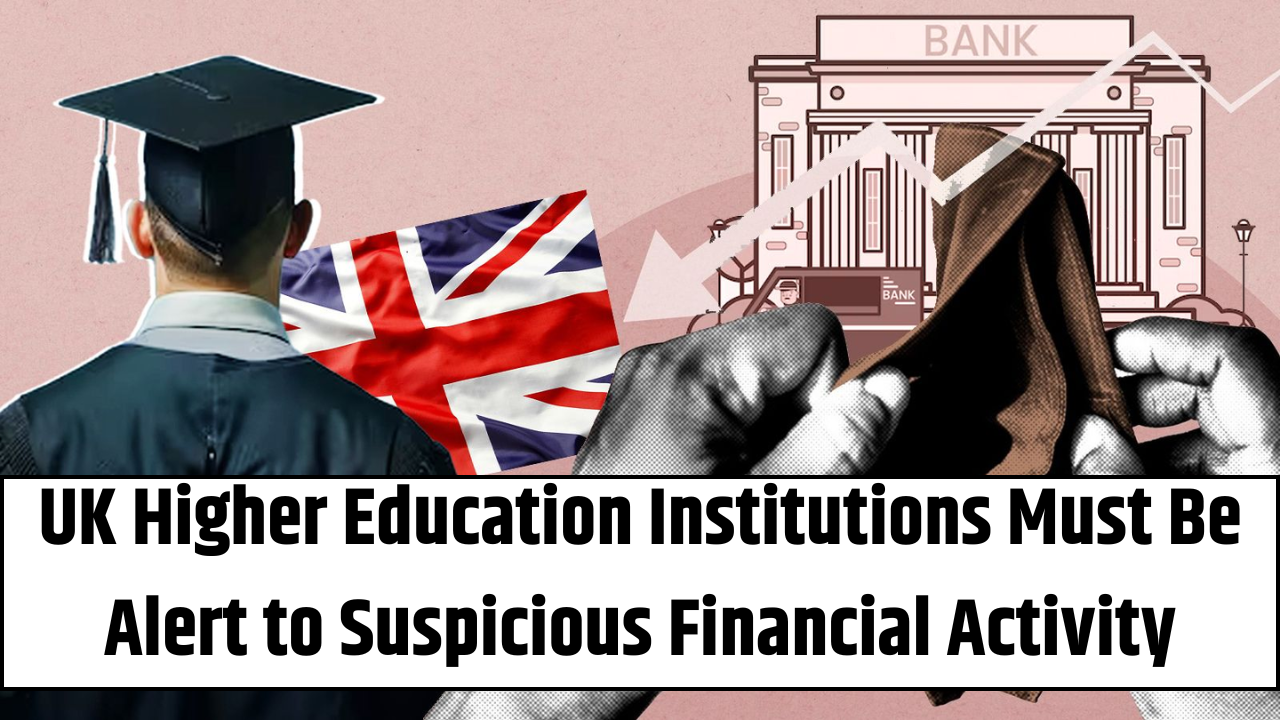
UK universities and schools are being urged to strengthen their safeguards against financial crime after the sector was flagged in the government’s latest national risk assessment (NRA) on money laundering and terrorist financing.
The 2025 NRA, a 163-page report and the UK’s fourth comprehensive assessment of financial crime risk, explicitly highlights vulnerabilities within the schools and higher education sector. Experts say the inclusion should serve as a warning that institutions must take active steps to prevent inadvertent breaches of financial crime and sanctions laws.
Stacy Keen, a financial crime and anti-money laundering expert at Pinsent Masons, said the report makes clear that lack of awareness is not an acceptable defence.
Also Read – How Americans Feel About Trump After His First Month Back in Office
“Inclusion in the NRA signals a need for risk mitigation and controls in the higher education sector to avoid inadvertent non-compliance,” Keen said. “Ignorance of risk is not a defence.”

The UK’s global reputation for academic excellence makes its universities and private schools particularly attractive to international students, including the children of political and business elites. However, that same prestige can also draw interest from criminals and kleptocrats seeking to launder illicit funds while securing reputational or professional advantages for their families.
Previous investigations have already raised concerns about the sector’s exposure. One study identified six recent cases in which UK schools or universities admitted children of West African politically exposed persons (PEPs) who had either been convicted of corruption-related offences or had assets seized. Other reporting found that at least 14 leading UK universities had accepted funding linked to Russian sources.
With sanctions against Russian nationals and PEPs expanded since the invasion of Ukraine, institutions face heightened legal risk. Keen noted that the National Crime Agency’s first successful prosecution under the UK’s Russia sanctions regime involved the payment of school fees in breach of sanctions.

“Educational institutions should be particularly careful to ensure they are not breaching UK sanctions,” she said.
Experts warn that risk extends beyond cash payments. Third-party payments, especially from overseas sources, can pose significant exposure if institutions fail to conduct enhanced due diligence. Students themselves may also be exploited by criminal networks, sometimes unknowingly, by being used as “cash couriers.”
In such cases, a student’s bank account is used to move illicit funds in and out of the UK, often in exchange for a share of the money or assistance with tuition fees. While some students knowingly participate, others may not fully understand the illegality or potential consequences of their involvement.
Also Read – Dismantling the U.S. Department of Education: What It Means for You
Keen said universities should adopt a risk-based approach, beginning with a clear assessment of where vulnerabilities exist.
“The NRA highlights areas of concern. Institutions should stress-test whether existing controls would identify these risks before they materialise,” she said. “If the answer is no, new controls should be implemented or existing ones strengthened to protect organisations from bad actors.”
Victoria Goddard, a university governance expert at Pinsent Masons, said regulators are likely to scrutinise any financial irregularities closely.
“Universities must remain vigilant,” Goddard said. “With so many potential points of weakness, institutions may be seen as soft targets. Any financial irregularity is bound to attract close attention from the Office for Students.”